The first hour, in full
Water off at the main, power safe, photographs, report it, then get air moving. The EPA wants wet areas and items dry within 24 to 48 hours.1
Free service. Call now and we'll connect you with a local restoration company. How it works
Six steps
Top to bottom
- 01First
Shut the water off at the main
Knowing where the main water shutoff is lets you stop a failing hose or pipe quickly.3 In a Boise house on a crawl space it is often where the water service comes in through the foundation, the same spot the Red Cross names as a likely place for a pipe to freeze.2
- 02Before you walk in
Check the electricity
If there is standing water and you can reach the main power switch from a dry spot, turn it off. If you would have to enter the water, call an electrician, and have the system checked before the power goes back on.4 If you smell gas, leave right away and call the gas company or the fire department.4
- 03Before you clean
Document it
Idaho's Department of Insurance tells homeowners to take photos or videos of the damaged areas and personal property.5 Do not throw out damaged items until the adjuster has visited, and keep every receipt.6
- 04Today
Report it to your insurer
Report the claim as soon as you know about the damage, and make temporary repairs to stop it getting worse. Do not have permanent repairs made before your insurer inspects: the company may not pay for repairs it did not authorize.5
- 05Hours 1 to 48
Get air moving
Open windows and doors when the weather allows and use fans and dehumidifiers, with the fans blowing air out.4 The EPA wants wet areas and items dry within 24 to 48 hours.1 If the furnace or ducts may have got wet, have them inspected before you turn the heat back on.4
- 06Any time
Know where DIY ends
Sewage or other contaminated water calls for a professional with experience in it.1 A flooded home may also be contaminated with sewage.4
Please don't
- Thaw a pipe with a blowtorch, a kerosene or propane heater, a charcoal stove or any open flame.2
- Assume one frozen pipe is the only one. If one freezes, others may too, so check every faucet.2
- Run a gas-powered generator or pump in a basement, garage or crawl space.4
- Step into moving flood water near the river. The National Weather Service warns that fast water only 6 inches deep can knock an adult down.7
- Make permanent repairs before the insurer has looked.5
What kind of water
Clean, contaminated, or worse
The IICRC S500 standard sorts water into three categories; the category sets the gear and the procedure.8
Category 1Clean source
From a clean, sanitary source with no significant health risk.8
A split supply line in a wall is the Boise winter case. It still has to be dry within 24 to 48 hours.1
Category 2Significantly contaminated
Contamination that can cause discomfort or illness.8
Water that came in through a window well or up through a crawl space is not tap water. A professional should assess it on site.9
Category 3Grossly contaminated
May carry harmful pathogens or toxins; often called black water.8
Sewage is the clear case, and needs a professional with experience in it.1
The IICRC's S500 committee says the category must be based on conditions actually observed at the site.9
How this works
What happens when you call
It is free to call, and calling commits you to nothing.
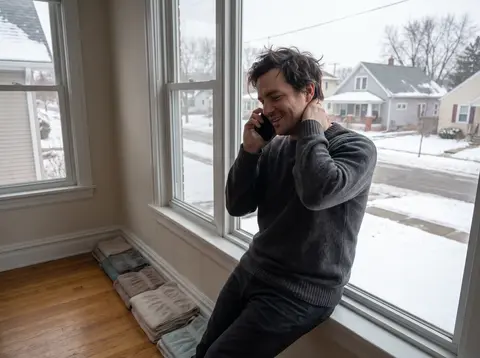
![A man on the phone by a snowy window, towels lined up along a wet wall behind him.]() 1
You call
Tell them what happened and where. Have the address ready.
- 2
We connect you
A call network puts you through to an independent local restoration company that serves Boise and is taking calls.
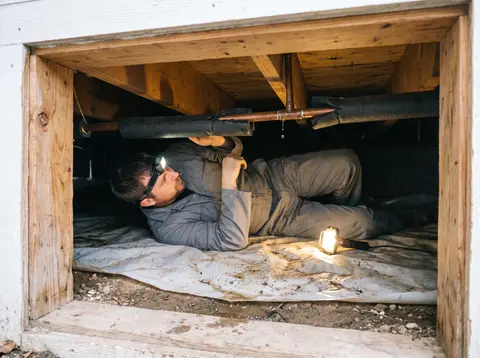
![A technician wearing a headlamp lies in a crawl space, checking a dripping pipe with torn insulation.]() 3
They assess and quote
If you want a visit, they look at the damage and quote their own price. Ask for it in writing.
We are a free referral service, not a contractor. The company that answers sets its own prices. How this service works
Want a local company to look at it?
Free to call. An independent restoration company that serves Boise answers, and you decide what happens next.
Call (208) 994-8334Boise Water Damage Advice is a free referral and information service, not a contractor. Calls go through our call-tracking line to independent local restoration companies, and we may be paid when a call qualifies. We do not do the work and do not set prices or availability. How it works
Sources
Each numbered note on this page points here. We read every page on October 24, 2026. Where sources disagree we say so; where we could not find a source we left the claim out. We are not affiliated with any of these organizations.
- U.S. EPA, A Brief Guide to Mold, Moisture and Your Home. Page updated February 18, 2026. www.epa.gov/mold/brief-guide-mold-moisture-and-your-home
- American Red Cross, Preventing & Thawing Frozen Pipes. Copyright 2026. www.redcross.org/get-help/how-to-prepare-for-emergencies/types-of-emergencies/winter-storm…
- Triple-I (Insurance Information Institute), How to protect your home from water damage. No date shown (page copyright 2026). www.iii.org/article/how-to-protect-your-home-from-water-damage
- CDC, Safety Guidelines: Reentering Your Flooded Home. Page updated August 24, 2026. www.cdc.gov/floods/safety/reentering-your-flooded-home-safety.html
- Idaho Department of Insurance, Post-Disaster Claims Guide. PDF last modified July 26, 2022. doi.idaho.gov/wp-content/uploads/2022/12/publication-post-disaster-claims-guide.pdf
- Triple-I (Insurance Information Institute), Settling insurance claims after a disaster. No date shown (page copyright 2026). www.iii.org/article/settling-insurance-claims-after-a-disaster
- National Weather Service (NOAA), Turn Around Don't Drown. Undated page, read October 24, 2026. www.weather.gov/safety/flood-turn-around-dont-drown
- Cleanfax (trade magazine), Jeff Cross, "Understanding Water Damage Categories". May 6, 2025. cleanfax.com/water-damage-categories/ Summarises the IICRC S500 categories. We have not reproduced the S500 standard itself, which is sold by IICRC.
- IICRC, ANSI/IICRC S500 Consensus Body Issues Position Statement on Category of Water Damage and Weather-Related Events (press release). March 16, 2026. iicrc.org/wp-content/uploads/2026/04/Weather-Related-Water-Damage-Position-PR_March-2026.p…